
The number of animal procedures in the Netherlands has declined by 20% over the past ten years to 423,970 in 2024. This continues a longer-term trend. However, there has been a sharp increase in animal procedures for preservation of species and protection of the environment. This figure rose from 22,631 to as many as 100,645 per year in 2024. This emerges from the report 'Animal Procedures in the Netherlands, 2015-2024', which the NCad presented to Minister Silvio Erkens for Food Security, Fisheries and Horticulture on Monday, 15 June
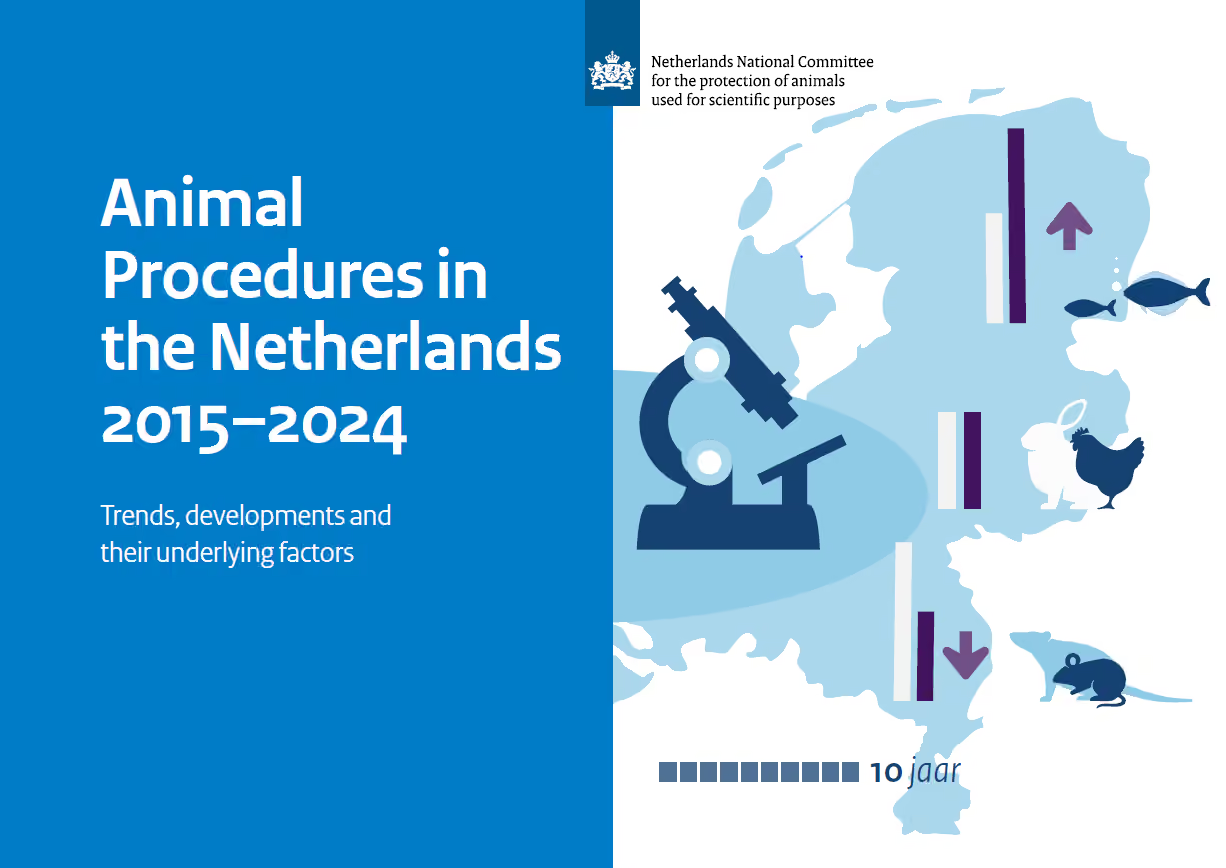
Over the past decade, the number of animal procedures has fallen by 20%, partly thanks to refinements in research methods, animal-free alternatives and technological innovation. For instance, fewer animal procedures were needed for fundamental, translational and applied research. Rising costs for research with animal procedures have also contributed significantly to this decline, and there is less funding available for animal procedure studies. Researchers expect this decline to level off somewhat in the short term.
Legislation and regulations
The majority of animal procedures (32% of the total) are conducted to comply with legislation or for routine production of biological materials, such as safety and efficacy tests for medicines and chemical substances. Despite the fact that this category has proportionally increased, the number of animal procedures has remained stable (at around 134,000 per year). European legislation requires that the safety, quality and effectiveness of chemical substances, medicines and plant protection products be established through research. In practice, this creates ongoing demand for animal procedures.
Sharp rise in protection of species studies
A significant development is the sharp increase in animal procedures for the preservation of animal species and protection of the environment. The category of species preservation studies has become the second-largest research category in the Netherlands, with 89,555 animal procedures in 2024. This represents an increase of 302% compared to 2015. This type of research is primarily conducted in response to policy-driven questions from Dutch authorities, particularly following new European and national legislation (such as the Nature Restoration Regulation). These animal procedures mainly involve mapping the populations and migration routes of animal species and determining whether animals (birds) carry dangerous zoonotic diseases. This is important for measuring the state of nature and water quality, and for protecting public health and livestock. According to experts, the scope for using alternative techniques in research on wild animals is limited. Experts therefore expect this type of research to continue growing.
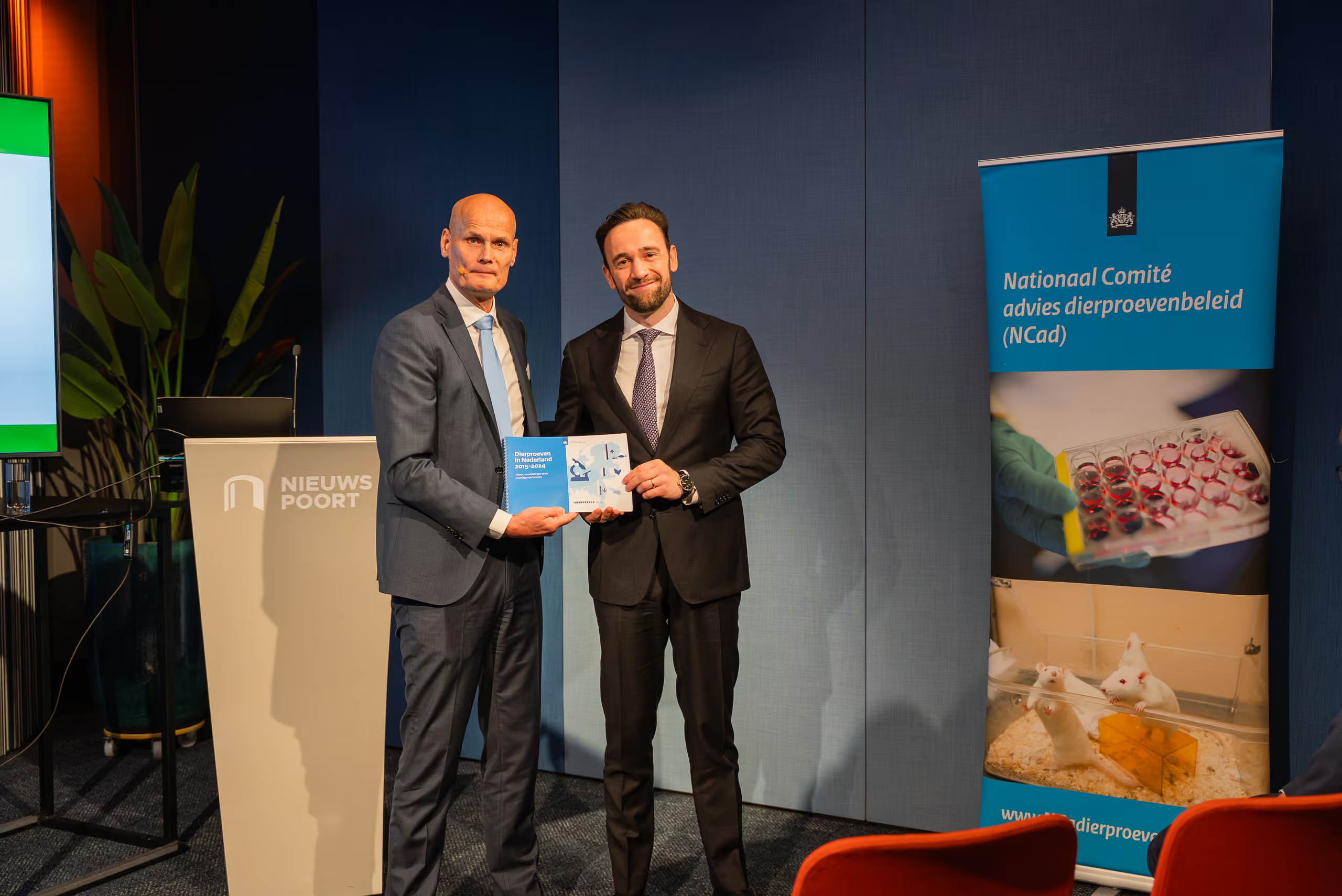
Prof. Dr. Nico van Meeteren presents the Animal Procedures in the Netherlands 2015-2024 report to the Minister for Food Security, Fisheries and Horticulture, Silvio Erkens.
Prof. dr. Nico van Meeteren, chair NCad: This report demonstrates that progress is being made, but also that the transition is far from complete. This is not a task for a few, but for many: from government bodies and funders, to companies, researchers and societal partners. It is precisely in this shared responsibility that opportunities lie. Through our Transition Policy Advice 2026, released on 9-September, the NCad wishes to contribute to further direction, coherence and, where possible, acceleration. A shared ambition, supported by a diverse field, is the best foundation for sustainable change.
Transition Policy Advice 2026
At the request of the Minister of Agriculture, Fisheries, Food Security and Nature, the NCad examined trends and developments within the animal procedures field and gathered expert opinions on the underlying factors since the amended Animal Procedures Act came into force in December 2014. In September 2026, the NCad published 'From niche to norm - Transition Policy Advice: working together towards a society without animal experiments' a follow-up containing recommendations for further phasing out animal procedures and promoting animal-free innovation.