
The Netherlands has been investing in non-animal research for years. New methods have been developed and the Netherlands has built a strong international position. However, this does not automatically lead to fewer animal experiments. NCad concludes that targeted change is needed throughout the whole system around it, from funding, regulatory frameworks and education to assessment frameworks.
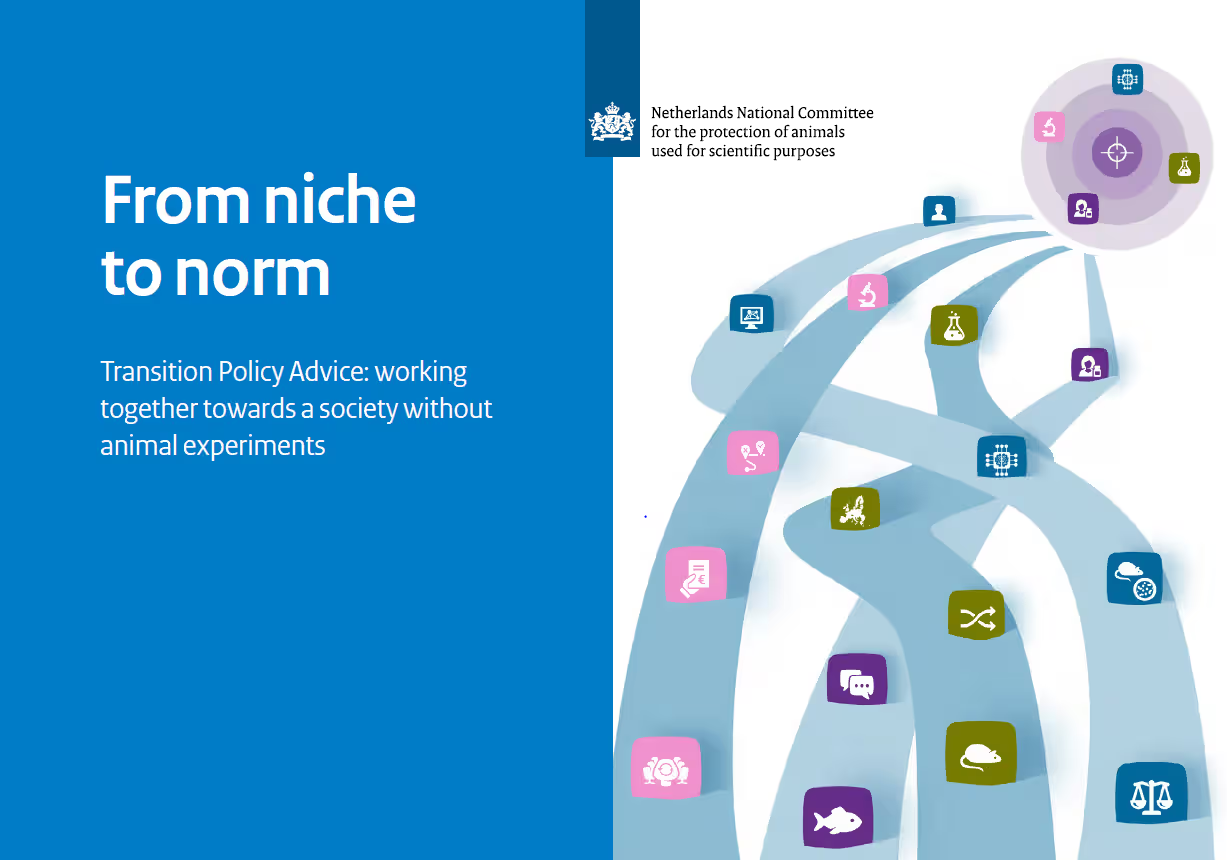
This also changes the rules of the game that currently often determine which research route seems most obvious in practice. This is set out in the latest policy advice report 'From niche to norm - Transition Policy Advice: working together towards a society without animal experiments', which the NCad presented to the Ministry of Agriculture, Fisheries, Food Security and Nature on 9 September 2026.
NCad chair Prof. Dr. Nico van Meeteren: A new method can work brilliantly, but if the system around it doesn't change, that innovation stays a niche. The next step, therefore, isn't to innovate even more, but to ensure that what already exists actually takes root in research practice.
Critically reassessing the use of animals in research
A fundamental shift is needed in how the use of laboratory animals is justified. Instead of asking 'Can this animal experiment be authorized?', the question must be posed much earlier in the research process: 'Which research strategy is scientifically and ethically the best justified for a given research question?' The question carries even greater weight now that growing scientific knowledge about what animals experience, and their cognitive and social capacities, demonstrates that animal interests have always been systematically underestimated.
Five pillars, one coherent strategy
The policy advice identifies five pillars that cannot be tackled in isolation from one another: governance and ownership, updating the ethical framework, innovation and chain policy, a coordinated international strategy, and monitoring to show whether the system is genuinely changing.
The transition cuts across policy domains, from science to education and international regulation. Obstacles often emerge at the interfaces between organisations and policy domains, where no single ministry can see the full picture. NCad therefore recommends an interdepartmental mission with shared ownership.
Independent coordination
To identify obstacles early, NCad advocates an independent orchestrating role, separate from the ministries, where signals are gathered that often only come to light late and in fragmented form. This means signals from science, industry and practice are recognised more quickly as a shared problem, rather than each party having to deal with it alone.